Automotive Testing Services

All about Magna's comprehensive Testing Services - from full system to component level

What defines Magna's Testing and Validation expertise?

A car icon is surrounded by a circular arrow cycle, illustrating a recycling or eco-friendly transport concept against a dark background.

Holistic testing approach

  • Seamless integration of simulation and physical testing
  • Continuous validation across development stages
  • Improving model accuracy and overall reliability

Icon of a car silhouette with connected lines and nodes inside a circle, symbolizing automotive technology or smart car systems.

Precision in test design

  • Optimized test setups based on advanced engineering data
  • Replicating real world loads and operating conditions
  • Reducing complexity through targeted load application
A simple icon showing a small square with an arrow extending from the top right corner, indicating expansion or scaling within a circle.

Scalable validation capabilities

  • Coverage from material and component to full vehicle level
  • Multi-system testing across all vehicle domains
  • Enabling reliable durability and performance assessment

Reliable Validaion of eDrive Systems

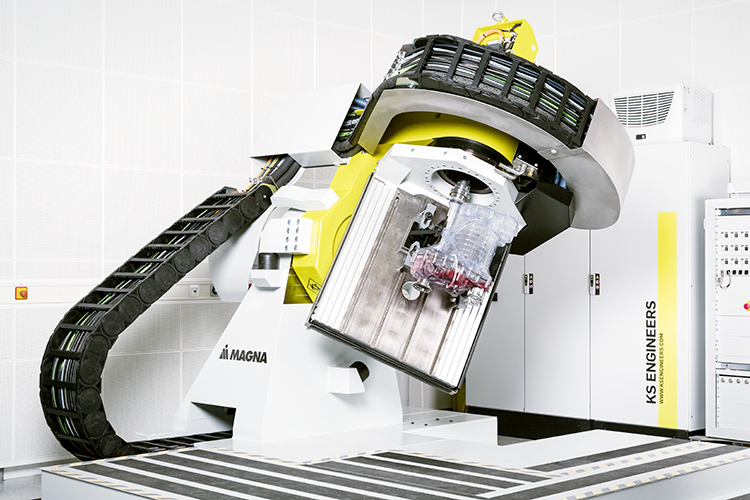
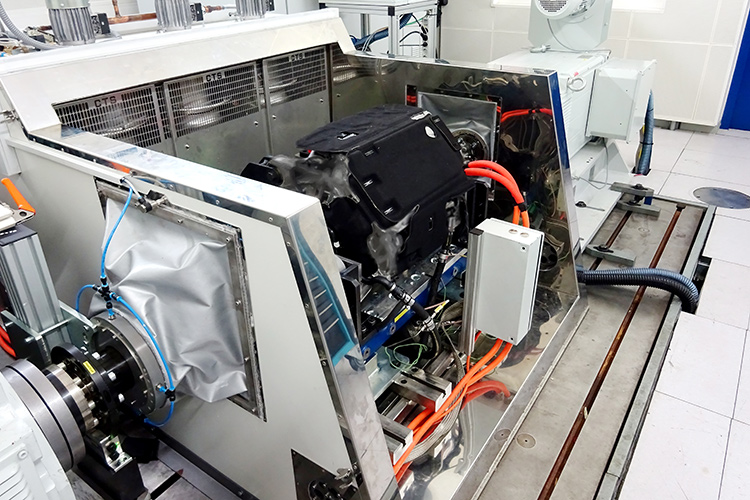
Comprehensive testing ensures durability, efficiency and performance. Functional and endurance tests replicate real world conditions for reliable system behaviour.
Rear view of grey vehicle taillights on with fog in background
Main Development Topics
  • Component testing
  • System and functional testing
  • Benchmarks
  • Durability tests
  • Efficiency analysis
  • High dynamic tilting tests
Highlighted Specifications
  • Gearbox input speed < 20,000 rpm
  • Power up to 800 kW for each test bench dyno
  • Wheel torque up to 60,000 Nm
  • Battery simulator up to 1,2 MW
  • Environmental conditions (water, oil and environment)
  • Wide range of applications: passenger car, light and heavy duty trucks, nonroad, ...
Rear view of grey vehicle taillights on with fog in background

Environmental Inverter & EMC Testing

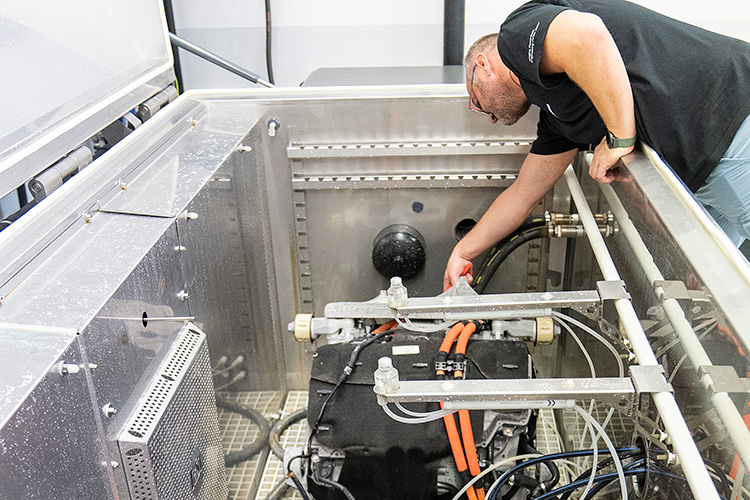
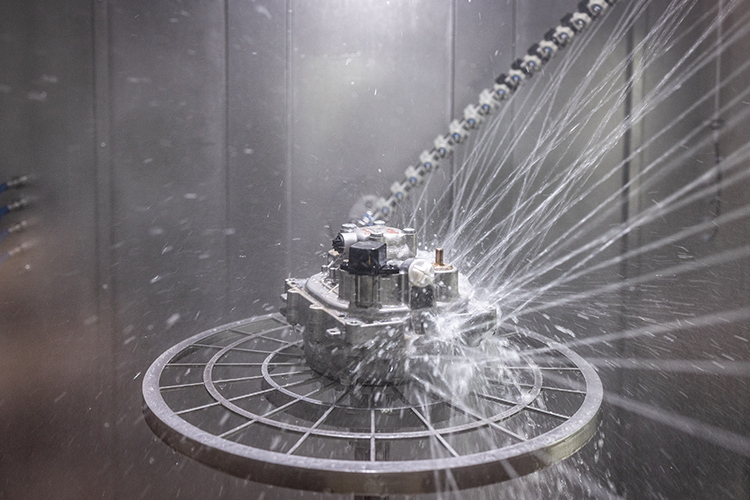
Environmental and EMC Testing ensures stable performance under extreme conditions. Temperature, moisture and electromagnetic influences are simulated to validate functionality and system robustness.
Rear view of grey vehicle taillights on with fog in background
Environmental Testing eDS, Inverter & eMotor
  • Climatic
  • Mechanic
  • Lifetime
  • Application related
Inverter Testing
  • Functional testing of inverter and subcomponents
  • Thermal verification
  • EoL testing
EMC Testing
  • Emission
  • Immunity
Rear view of grey vehicle taillights on with fog in background

Advanced Combustion Engine Test Benches for System Validation

Engine Test Benches enable precise validation of performance, efficiency and durability. Controlled conditions allow accurate measurement and optimization across conventional and alternative powertrain systems.
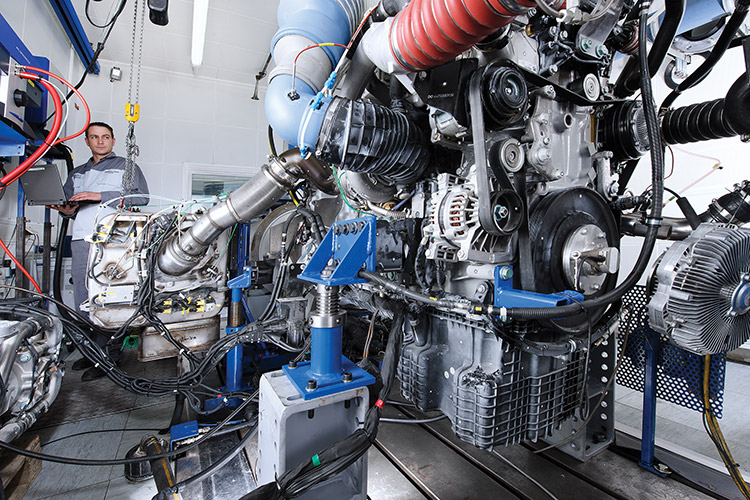
Testing equipment in a manufacturing facility
Main Development Topics
  • Dynamic and steady state testing
  • Function and durability testing
  • Engine and OBD calibration
  • Exhaust gas after treatment calibration and development
  • Component testing
  • Engine benchmark
  • Engine homologation
  • Frictional power analysis
Specification & Supported Engines
  • Compression and sparked ignition engines, 48V & HV hybrid systems
  • Power range: up to max. 520 kW mechanical, up to < 600kW electrical
  • Field of applications: passenger car, light and heavy duty trucks, nonroad, ...
Measurement Equipment
  • AVL FTIR / IAG FTIR
  • AVL Micro Soot
  • AVL Particle Counter
  • AVL Opacimeter
  • AVL Coriolis
  • AVL Indicating System
  • AVL Flow Sonix

High Altitude & Climate Test Bench for Environmental Validation

Altitude and Climate Testing under extreme environmental conditions to validate engine and system performance. Temperature, pressure and altitude variations ensure reliable operation across global use scenarios.
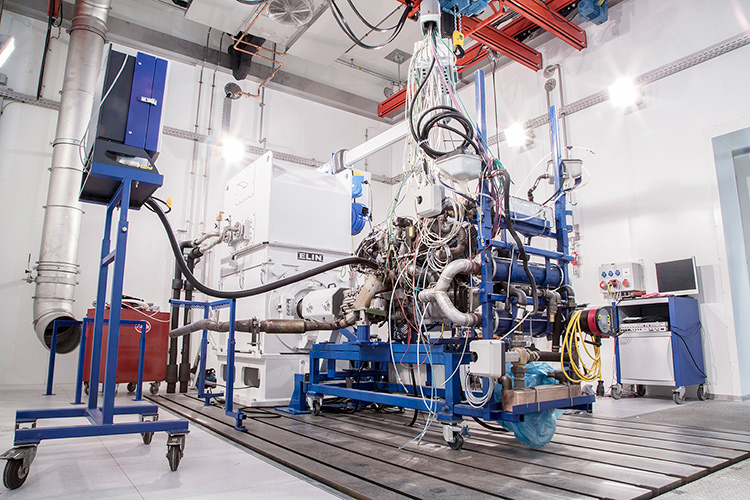
Testing equipment at a manufacturing facility
Test Chamber
  • Max. altitude 5000 m (540 mbar)
  • Performance 500 kW
  • Torque 2600 Nm / 3100 Nm peak
  • Max. speed 8000 U/min
  • Temperature -25°C / +50°C
  • Electrical power supply

Fatigue Testing for Durability Performance

Fatigue testing validates structural durability under complex load conditions. Multi axial setups simulate real world stresses to ensure long term component and system performance.
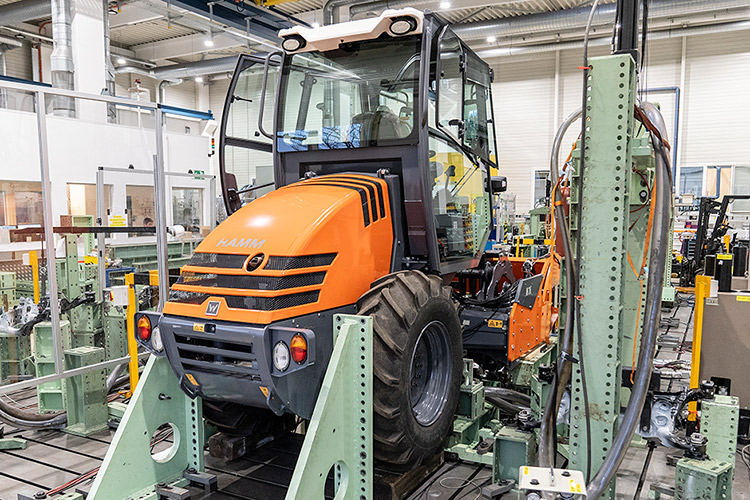
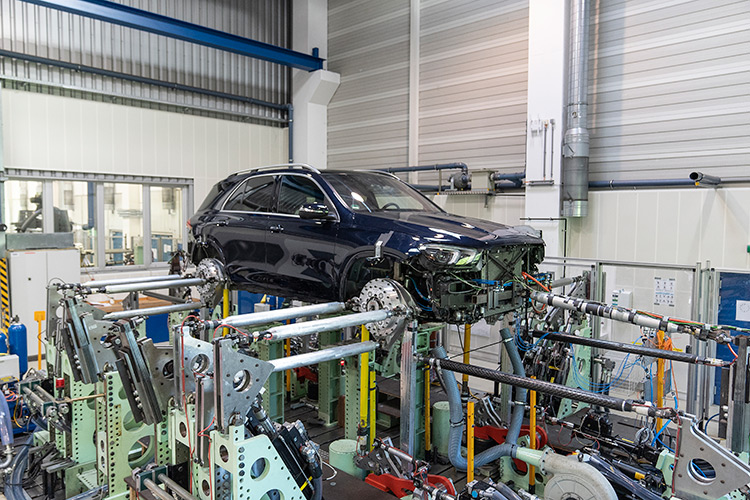
Rear view of grey vehicle taillights on with fog in background
Equipment & Infrastructure
  • 250 servo-hydraulic actuators
  • Forces between 10 kN - 500 kN
  • Frequency up to 100 Hz
  • Up to 40 actuators can be controlled simultaneously
  • Max. weight of specimen: 50 tons
Main Testing Topics
  • Cabin / body
  • Axle and suspension
  • Add on parts and components
  • Frame and subframe
  • Steering system
  • Determine material properties
  • Material testing (high T)
  • Testing under corrosion

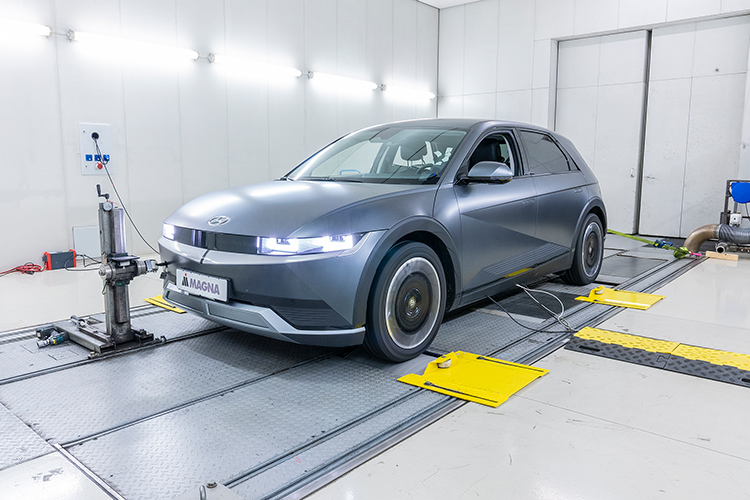
4WD Chassis Dynamometer for Full Vehicle Performance

The 4WD chassis dynamometer enables controlled full vehicle testing. Real world driving conditions are replicated to validate performance, emissions and overall system behavior.

Rear view of grey vehicle taillights on with fog in background
Main Development Topics
  • Acoustics and vibrations
  • Energy and thermal management
  • Functional development
  • Emission measurement
Specification
  • 4 single wheel drives: 4 x 250 kW
  • Maximum vehicle speed: 260 km/h
  • Max. drag force: 12,000 N/axle
  • Flexible wheelbase from: 2.0 4.4 m
  • Vertical load per axle: 4,500 kg
Air Stream Simulation
  • Airflow: 140,000 m3/h
  • Variable outlet: 0.54 ... 1.8 m2
  • Temperature condition: -20°C up to +50°C
NVH Test Cell
  • Free field from: 40 Hz to 10 KHz
  • Cell dimensions (l x b x h): 12 x 8.3 x 4.5 m

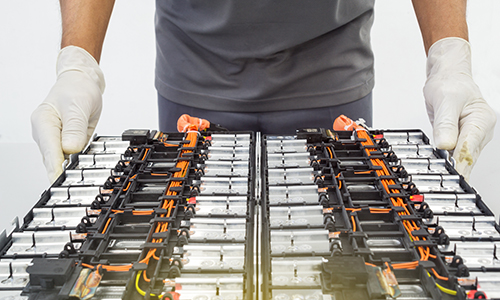
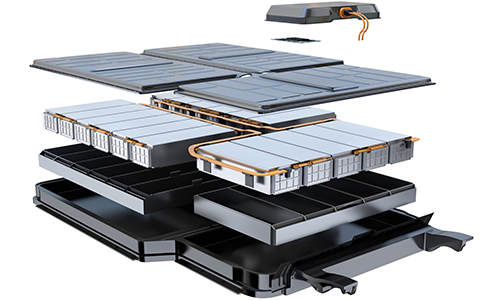
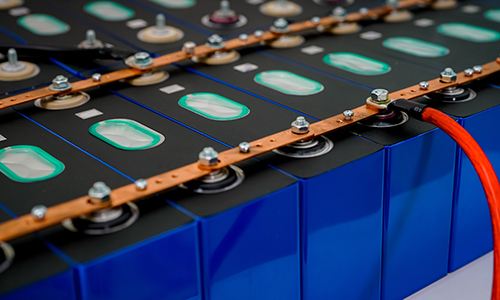
Advanced Battery Cell Testing for Safety and Lifecycle

Battery cell testing evaluates durability, safety and lifecycle behavior under controlled conditions. Temperature, cycling and scenarios ensure stable operation across all usage phases.
Rear view of grey vehicle taillights on with fog in background
Test Configurations
  • Electrical characterization (performance, capacity, inner resistence)
  • Thermal performance characterization
  • Aging and lifetime
  • Engineering development of electrothermal cell models
Temperature Chamber
  • -40°C to +90°C
  • 5 K/min
  • 4500 W heat compensation
  • 1000 l
  • Safety: HL5
Cell Cycle
  • 0 - 5 V
  • 12 channels a 50 A
  • 4 channels a 600 A
  • Parallelization up to 2400 A
  • ± 0.01% @ current
  • ± 0.025% @ voltage

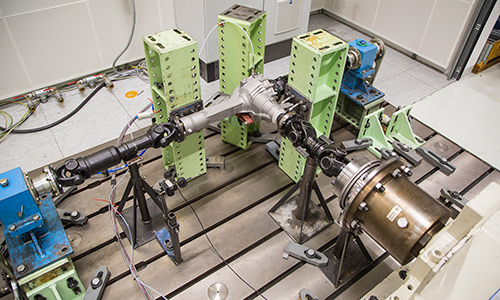
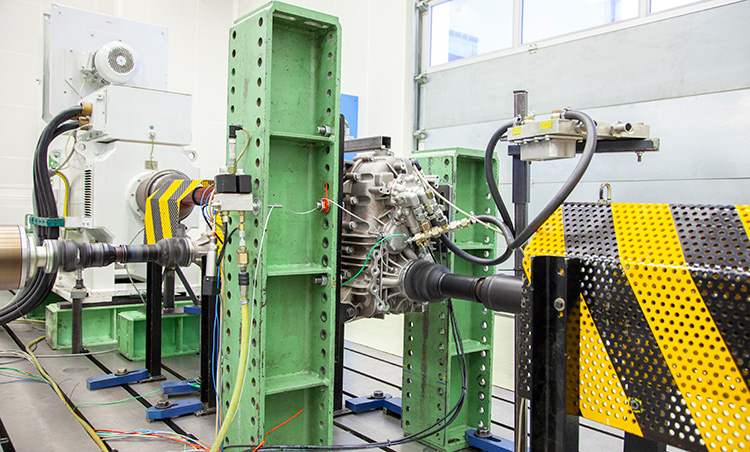
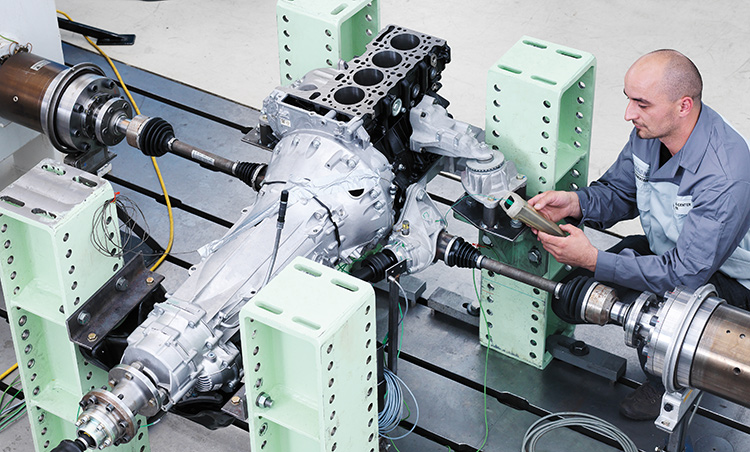
Comprehensive Gearbox & Driveline Testing for System Integrity

Driveline testing assesses functionality, durability and strength under realistic loads. Integrated test setups support consistent behaviour across complete driveline systems.
Rear view of grey vehicle taillights on with fog in background
Functional Testing
  • Lubrication and ventilation testing
  • Bearing adjustment
  • Contact pattern
  • Shifting of gears
  • Engagement of locks
  • Clutch characteristics
  • Temperature behavior loaded
  • Efficiency measurement
  • NVH measurements
Durability Testing
  • Gears, bearings
  • Differential
  • Seal rings
  • AWD clutch
  • Actuation system
  • Park lock
Ultimate Strength Testing
  • Static ultimate strength testing
  • Dynamic ultimate strength testing

Thermal System Testing for Stable Operation

Thermal testing evaluates heat management and system behavior in varying conditions. Bench and vehicle level tests ensure consistent performance across different thermal loads and environments.
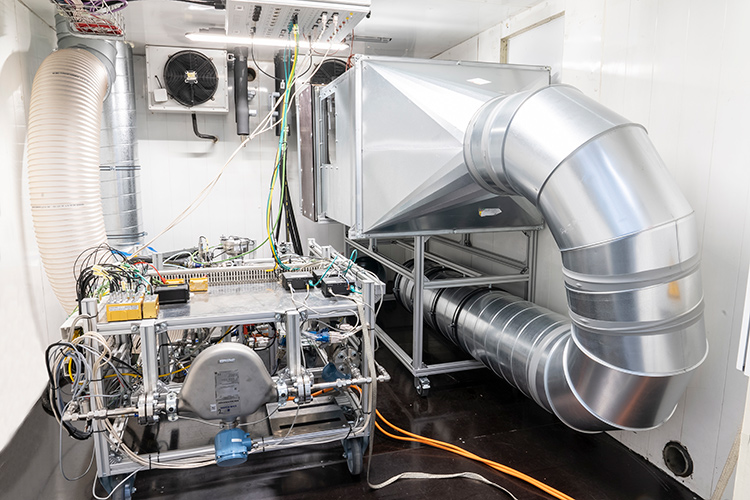
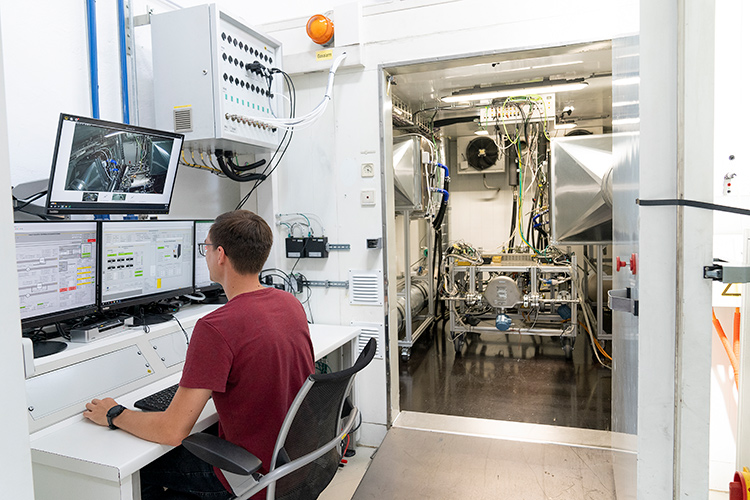
Testing equipment in a manufacturing facility
Thermal System Tests Bench
  • Validation up to complete vehicle thermal systems (HVAC, refrigerant and coolent system)
  • Conditioning & control of coolant and air flow (vehicle in the loop)
  • Control strategy development & validation
  • Component & system characterization
  • System efficiency investigations
  • Functional & durability validation
Thermal Vehicle Testing
  • Validation of vehicle thermal & energy management
  • Validation of cabin HVAC & thermal comfort system
  • Performance & efficiency verification
  • Calibration of thermal system control logic
  • Chassis dyno, test track and on road testing
Person using testing equipment in a manufacturing facility

Proving Ground for real world vehicle testing

The proving ground enables testing under real driving conditions. It supports verification, benchmarking and homologation across a wide range of scenarios.
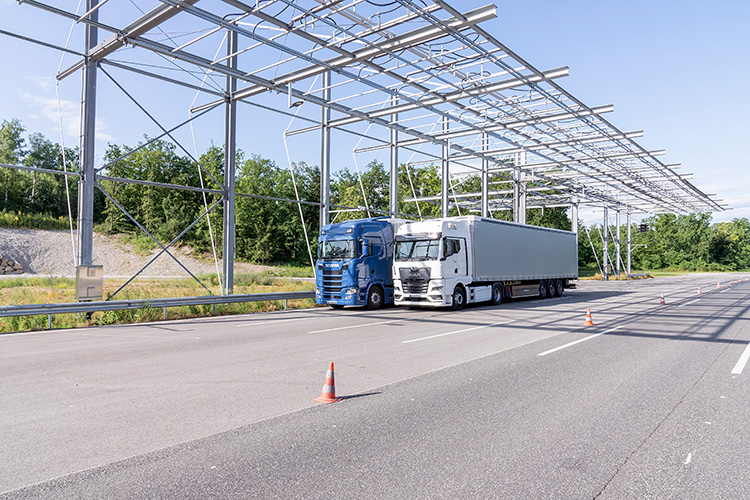
Two tracker trailers driving along a highway
Vehicle Verification & Testing
  • Thermal Management
  • Energy Management
  • ADAS Function Testing
  • Acoustics and Vibrations
  • Drivability
  • Charging
  • Hybrid & ICE
  • On-Site Proving Ground / On-Road Testing
  • 4WD Chassis Dyno
ADAS Testing & Benchmarking

Following Tests are possible:

  • Adaptive Cruise Control
  • Autonomous Emergency Braking
  • Blindspot Detection
  • Lane Departure Warning
  • Birdview
  • Rear Automatic Braking
  • Lane Keep Assistant
  • Automatic Parking System
  • Lane Change Assistant
  • Adaptive Front Lighting
  • Vehicle Platooning
  • Rain Sensor
  • Intelligent Speed Assist (road sign recognition)
Homologation Support
  • Brake Homologation ECE R13
  • Steering Homologation ECE R79
  • Acoustic Homologation ECE R51
  • Advanced Emergency Brake Homologation ECE R131 / ECE R152
  • Lane Departure Warning ECE R130
  • Blind Spot Detection Homologation ECE R151
  • Adaptive Cruise Control ISO 15622 / SAE J2399
  • Installation of lighting and light-signalling devices ECE R48
  • SORT Measurements

Key advantages of Magna's Testing and Validation Capabilities

End to end development support

  • Covers the full process from early validation to final release
  • Enables faster development cycles and reduced iteration loops
  • Supports seamless transition from simulation to physical testing

High accuracy and repeatability

  • Controlled environments ensure consistent test results
  • Precise measurement systems improve data quality
  • Enables reliable comparison across test scenarios

Real world condition simulation

  • Reproduces complex operating and environmental conditions
  • Supports validation under dynamic and extreme scenarios
  • Enhances confidence in system behavior before production

Efficient and scalable testing

  • Flexible setups for different components and systems
  • Adapts to varying project requirements and vehicle types
  • Supports cost efficient and time optimized validation processes

FAQs - About Testing Services

What Testing Services does Magna provide across the full vehicle development process?

Magna provides comprehensive testing services across the entire vehicle development chain, starting from material characterization and component validation through to subsystem and full vehicle testing. This includes functional, durability, environmental, EMC, thermal and performance testing across powertrain, driveline and complete vehicle systems. The integrated approach ensures that all components are validated both individually and within the overall system, supporting consistent quality, reduced development risks and reliable performance outcomes across all stages.

How does Magna replicate real world operating conditions in Testing?

Magna replicates real world operating conditions by combining controlled laboratory environments with dynamic testing scenarios that reflect actual vehicle usage. This includes the simulation of mechanical loads, temperature variations, humidity, altitude and vibration, as well as complex driving conditions. By aligning test parameters with real application data, systems can be evaluated under realistic and repeatable conditions, ensuring that performance, durability and functionality meet real world requirements.

How are simulation and physical testing connected within Magna’s validation approach?

Simulation and physical testing are closely integrated through a continuous validation loop that connects virtual development with real world data. Simulation models are initially used to predict system behavior and optimize design, then refined and validated using data from physical testing. This iterative process improves model accuracy, reduces development time and minimizes the need for multiple physical prototypes. As a result, Magna achieves a more efficient and reliable validation process across all development phases.

How does Magna support complete vehicle validation and integration

? Magna supports complete vehicle validation by combining system level testing with chassis dynamometer testing and proving ground validation. This ensures that all components and subsystems function together as an integrated system under realistic operating conditions. The approach enables evaluation of performance, durability, emissions and overall vehicle behavior across different scenarios. By validating the full vehicle early and continuously, Magna helps ensure compliance with global standards and reliable operation in real world environments.

Related Automotive Technologies

Commercial Vehicle Engineering

Propulsion Engineering

Contact

Engineering Center Steyr GmbH & Co KG
Steyrer Straße 32
4300 St. Valentin
Austria

Office: +43 7435 501 0
Email: info.valentin.mpt@magna.com